
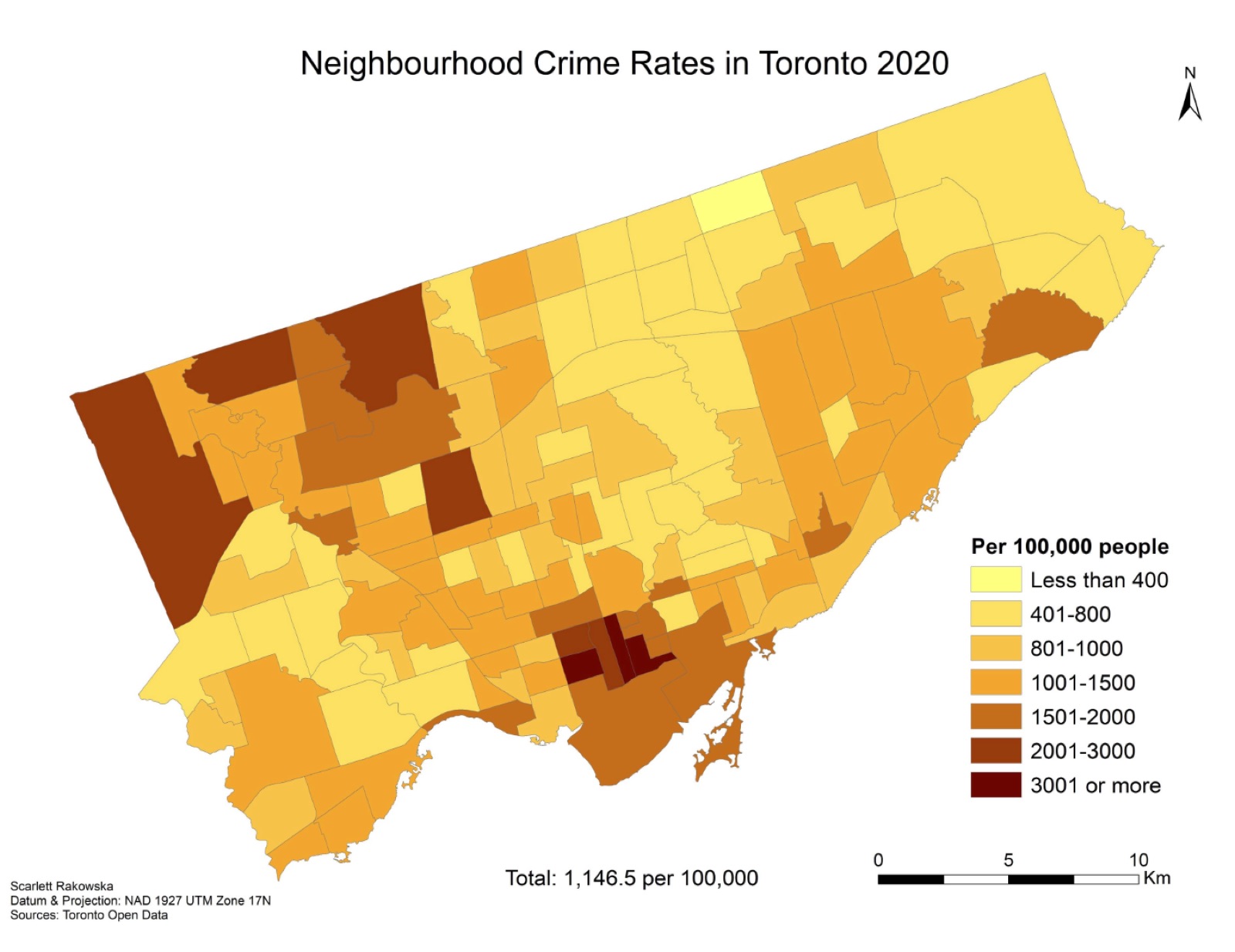
Toronto Police Service publishes break-and-enter data at neighbourhood granularity for anyone who wants to look. Almost no homeowner ever does. The dataset is a better guide to your actual risk than anything your insurance company will ever tell you, and it’s free.
This piece is a reading guide. We’ll walk through how Toronto Police count break-ins, how to pull the 2025 numbers for your own block, and how to interpret the results without overreacting or underreacting. No product pitch.
Where can I actually see Toronto break-in data for my neighbourhood?
The headline dataset is called Major Crime Indicators (MCI). It’s a running, open, geocoded record of reported incidents in several categories: assault, auto theft, break and enter, robbery, theft over, and a couple of related classes. The data is published through the Toronto Police Public Safety Data Portal and updated on a rolling basis. Each incident carries a date, a reported neighbourhood, and offset coordinates.1
Two useful things to know up front. First, the coordinates are offset for victim privacy, so the pin is not the exact address. The neighbourhood label is reliable; the house-level pin is not. Second, the dataset is reported incidents, not cleared ones. A break-in that shows up in MCI was reported to TPS, regardless of whether an arrest or conviction followed. That’s the right number for risk assessment, because it’s the number that actually happened on the street.
Which Toronto neighbourhoods have the highest break-in rate per 100,000?
The first mistake people make reading TPS data is comparing raw incident counts between neighbourhoods. A large neighbourhood with more residents and more businesses will almost always show higher raw break-in counts than a small quiet residential pocket. That’s not risk. That’s size.
The honest metric is rate per 100,000 residents (or per 100,000 daytime population for commercial-heavy areas). A Narcity analysis of TPS 2025 data, cross-referenced to Statistics Canada population figures, put the highest neighbourhood-level rates near 700 per 100,000, and the lowest under 100 per 100,000. The city-wide average for break-and-enter was in the low-to-mid 200s per 100,000 for 2025.2
A block-level example makes the rate-vs-volume point concrete. University neighbourhood, which covers the downtown academic and medical district, posted one of the highest 2025 B&E rates in the city. The raw incident count is not the highest, because the neighbourhood is small and the permanent residential population is modest. Divided by that population, the rate per 100,000 is very high. The rate is telling you something real about the corridor: commercial-heavy blocks with low residential density and high foot traffic tend to concentrate opportunistic B&E.
Why do break-ins cluster in certain Toronto blocks and not others?
The clusters you see on a break-in map are not random. Three factors tend to drive them.
- Low guardianship. Blocks with high commercial-to-residential ratio, long stretches of non-residential frontage, or high seasonal turnover (students, short-term rentals) produce gaps in who’s watching at any given hour. Burglar-interview research consistently finds that “someone’s home” is the single strongest deterrent, and empty blocks give up that deterrent on a schedule.
- Easy entry. Ground-floor access to patio doors, basement windows below grade, rear glass visible from an alley. Neighbourhoods with dense laneway access or long rows of rear-yard glass see more attempted entries than neighbourhoods with exclusive front-facing stock.
- Value signals. High-value inventory (retail jewellery, cannabis, pharmacy narcotics, premium electronics) concentrates B&E volume around specific retail corridors. On the residential side, luxury vehicle concentration on driveways is a surprisingly strong proxy: burglars use the car as a first-pass cue for what’s inside the house.
When you map those three factors onto Toronto’s neighbourhood-level rates, the clusters more or less predict themselves. Downtown core, Yonge-Bay, Kensington, and University sit high because they’re commercial-dense with low residential guardianship. Bridle Path, Rosedale, and Forest Hill sit high because the value signal is obvious from the street, even though the guardianship is comparatively high. Quiet middle-income family neighbourhoods with front-and-back street access sit low on all three factors, and the rate reflects it.
How do I pull the break-in data for my own Toronto block in five minutes?
You don’t need a GIS degree to read your neighbourhood. The Toronto Police Public Safety Data Portal includes a filterable map of the MCI dataset. Here is the short version of the process we walk clients through.
- Go to the Toronto Police Public Safety Data Portal and open the Major Crime Indicators dashboard.
- Filter the incident category to “Break and Enter” only. Ignore auto theft, robbery, and the other MCI classes for this purpose.
- Filter the date range to a full calendar year (2025 is the most recent complete year as of this writing). Avoid year-to-date partial windows, which distort seasonal patterns.
- Zoom the map to your neighbourhood. Look at the dot pattern. Dense pockets of dots on a handful of streets is a corridor effect, not a whole-neighbourhood effect. Single scattered dots across a wide area is background noise.
- If you want the per-100K rate, divide the B&E count for your neighbourhood polygon by the most recent Statistics Canada population estimate for that same polygon, then multiply by 100,000. A good-enough comparison, not a perfect one.
If the pattern you see concentrates on a corridor you don’t live on, your actual risk is lower than the neighbourhood summary suggests. If the pattern concentrates on your exact rear-lane, it’s higher. That’s the point of looking at the real data instead of the headline number.
What should I actually do with a high neighbourhood break-in rate?
Some honest framing. A neighbourhood-level rate of 400 to 700 per 100,000 is high for Toronto, but it is still well under one percent of households per year. On your own block, year-over-year, the expected hit rate is single digits at most. The point of pulling the number is not to feel frightened. It’s to have an accurate picture of the baseline you’re insuring, alarming, and hardening against.
Two uses for the data once you have it. The first is simply decision quality. Knowing that your block sits two or three times higher than the city average makes it easier to prioritize ground-floor openings and to decide which upgrades actually correspond to your risk tier. The second is the conversation with your broker. At commercial renewal, walking into a meeting with a specific neighbourhood rate, cited to TPS open data, is a different conversation than handing over a generic risk narrative. Underwriters respond to the specific.
Whatever you do next, do it from the number. The open data is sitting there. Use it.