
Short answer: security window film does not make glass unbreakable, so it will not stop every break-in. What it does is stop the glass from falling out. A properly anchored 14-mil film turns a window that gives way in seconds into roughly 90 seconds of loud, repeated, visible work, and most break-in attempts are abandoned long before that.
That is the honest version, and it is the one worth understanding before you spend money. Film is a delay-and-deterrent layer. It works because of how break-ins actually happen: fast, quiet, and through the easiest piece of glass on the property.
What happens when filmed glass is hit
Ordinary window glass breaks and falls out of the frame, leaving an opening someone can reach or step through. Security film is a clear polyester laminate bonded to the inside face of the glass. When the pane is struck, it still cracks, but the fragments stay bonded to the film instead of falling away.
The second half of the system is the edge. We anchor the film to the frame with structural silicone, so the whole cracked pane stays in the opening rather than being pushed in as one sheet. Without that anchoring, a film can hold the glass together and still let the entire pane fold inward. We explain the difference in anchored vs. unanchored security film.
Getting through means hitting the same spot over and over, making noise the whole time, in full view of the street or the neighbours. That is exactly the exposure an opportunistic break-in is trying to avoid.
Most break-ins are built on speed
Unprotected residential glass can be defeated in a few seconds. Our breakdown of how long a break-in actually takes walks through the timing: the glass fails almost immediately, while an alarm or a call to police takes minutes to turn into a response.
Research on how burglars make decisions points the same way. In a UNC Charlotte study, roughly 8 in 10 burglars said they would break off or retreat once they ran into an alarm or an obstacle mid-attempt.1 Film is that obstacle, placed exactly where the attempt starts.
The openings worth protecting first
- Patio and sliding doors. Usually the largest pane in the house, at the back, out of sight of the street. See our guide to patio and sliding door security film.
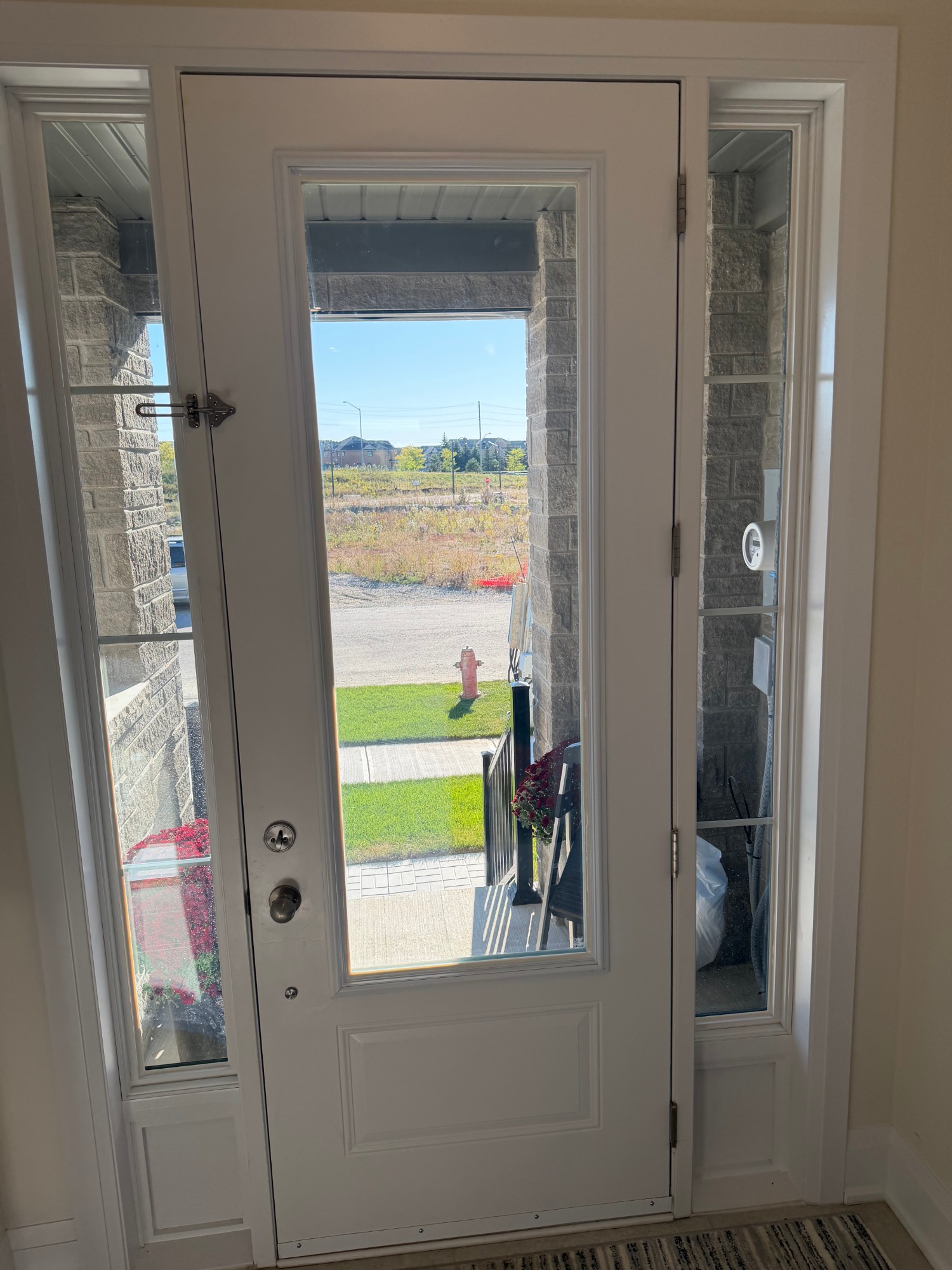
- Glass beside or in the front door. Break a sidelite and the deadbolt is one reach away.
- Ground-floor and basement windows. Reachable from the yard or the side path, and quick to clear once broken.
- Storefronts and display cases. Smash-and-grab depends on getting in and out in under a minute.
You rarely need every window done. A good assessment protects the openings that are reachable, hidden from the street, or one reach from a lock.
Where film is not the answer on its own
Film does not replace a lock, an alarm or good lighting, and it does not make glass bulletproof. Performance depends on the glass, the frame and the quality of the install. A weak frame or a poorly bonded edge limits what any film can do, which is why we check the frames and glass type during the assessment before recommending anything.
Where it fits best is alongside what you already have. An alarm tells you something is happening; film buys the time for that alarm to matter. If you are weighing it against other options, our comparison of security film vs. laminated glass vs. window bars sets the costs and trade-offs side by side.
Why GTA homeowners are asking
Toronto Police published 6,023 break-and-enters for 2025, broken down by neighbourhood. Our walkthrough of what Toronto’s 2025 break-in data reveals about your block shows how to look up your own area. Most of those incidents start at a door or a window, which is the part of the house film is designed for.
If you want to know which of your openings are worth protecting, we will walk the property with you and leave a fixed written quote. Book a free assessment.