
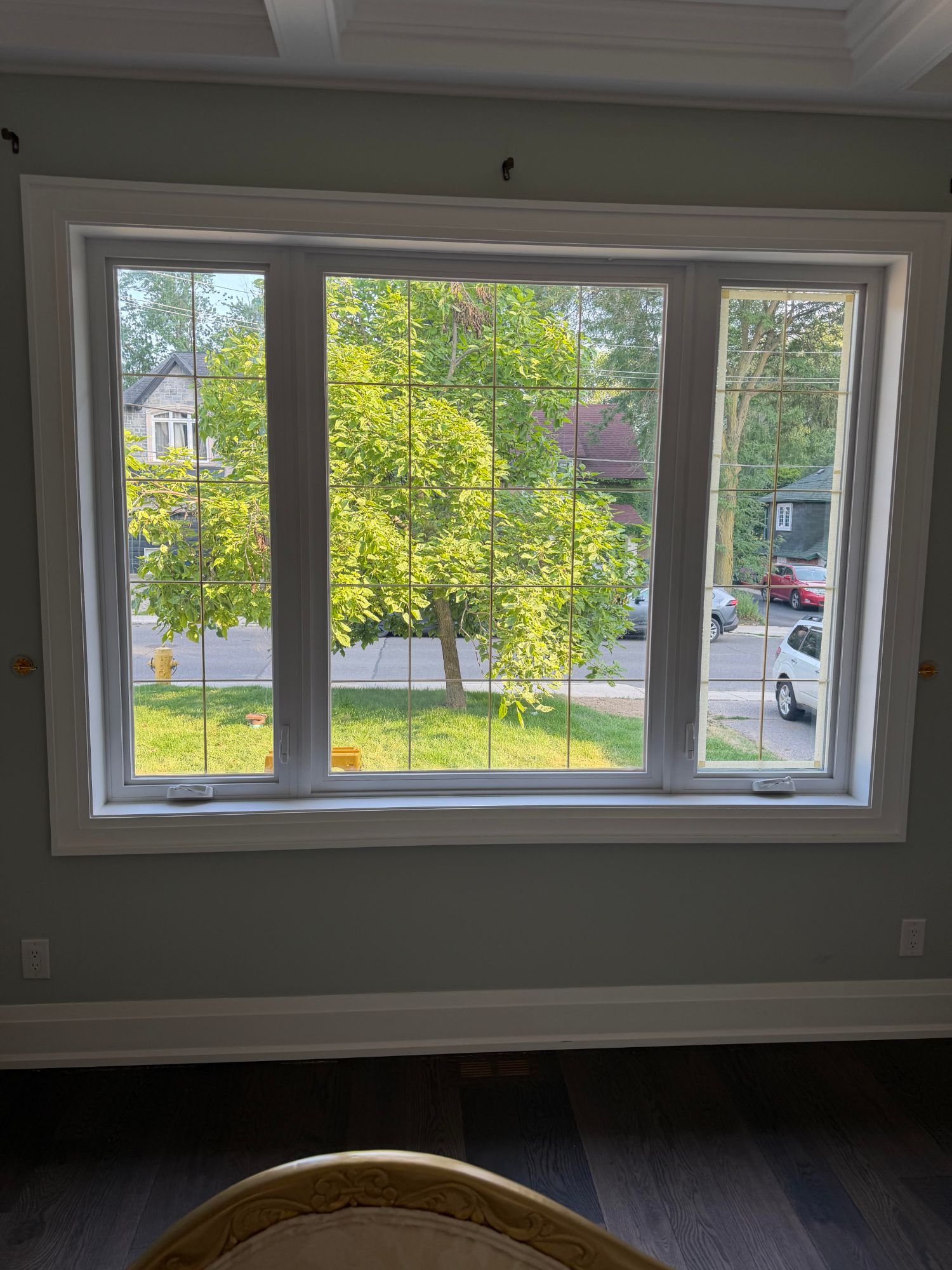
Short answer: security film is the lowest-cost way to make the glass you already have hold together when it is hit, and it is invisible. Laminated glass does the same job built into the pane but means replacing the windows. Bars stop entry outright but look institutional and can block an exit. An alarm tells you a break-in is happening; it does not slow one down.
Each option solves a slightly different problem, so the right answer depends on what you are protecting and how much the look of the house matters to you. Here is how they compare.
The four options side by side
| Option | Typical GTA cost | Slows entry? | Visible? |
|---|---|---|---|
| Security film (anchored) | From about $1K, scales with project size | Yes, sustained delay | No, optically clear |
| Laminated / reinforced glass | $20K–$40K+ (window replacement) | Yes | Minimal |
| Window bars | $3K–$6K | Yes | Very |
| Alarm system | $2.3K–$6.3K over 5 years ($30–$80/month) | No, alerts only | Yes |
Costs are typical recent GTA figures and vary with the property. Our own pricing is a fixed written quote after an in-person assessment; the full breakdown is in how much security window film costs in Toronto.
The same idea, built into the pane
Laminated glass is two layers of glass bonded to a plastic interlayer. When it breaks, the pieces stay stuck to the interlayer instead of falling out, which is why it is used in car windshields and security glazing. Our guide to tempered, annealed and laminated glass explains how each type breaks.
The catch is that you cannot add laminated glass to the windows you already have. It means new glazing units, often new sashes, and the cost and disruption of a window replacement. Security film gets you the same “holds together when it breaks” behaviour on your existing glass, installed in a day.
Strong, but you live behind them
Bars are the most physically secure option on this list: if they are well fixed, nobody is coming through that opening. The trade-offs are how the house looks from the street and from the inside, and safety. Bars on a window you might need as an emergency exit, such as a bedroom or basement window, can trap people inside, so they need a release mechanism or should not go there at all.
An alarm and film do different jobs
An alarm detects; it does not delay. By the time a monitoring centre calls and a response arrives, unprotected glass has long since been cleared. That gap is the reason film and alarms work well together: the alarm raises the alert, and the filmed glass buys the minutes for that alert to matter. We go through the timing in how long a break-in actually takes.
Which one makes sense for you
- You want protection without changing how the house looks: security film.
- You are already replacing the windows: ask for laminated glass in the vulnerable openings.
- A basement or side window that is never used and never seen: bars can make sense, as long as it is not an emergency exit.
- You want to know when something happens: an alarm, ideally paired with film on the glass it watches.
Film does not make glass unbreakable, and it is not a replacement for locks or an alarm. What it changes is the few seconds a break-in depends on. If you would like a recommendation for your own windows, book a free assessment and we will tell you which openings are worth protecting, and which are not.