
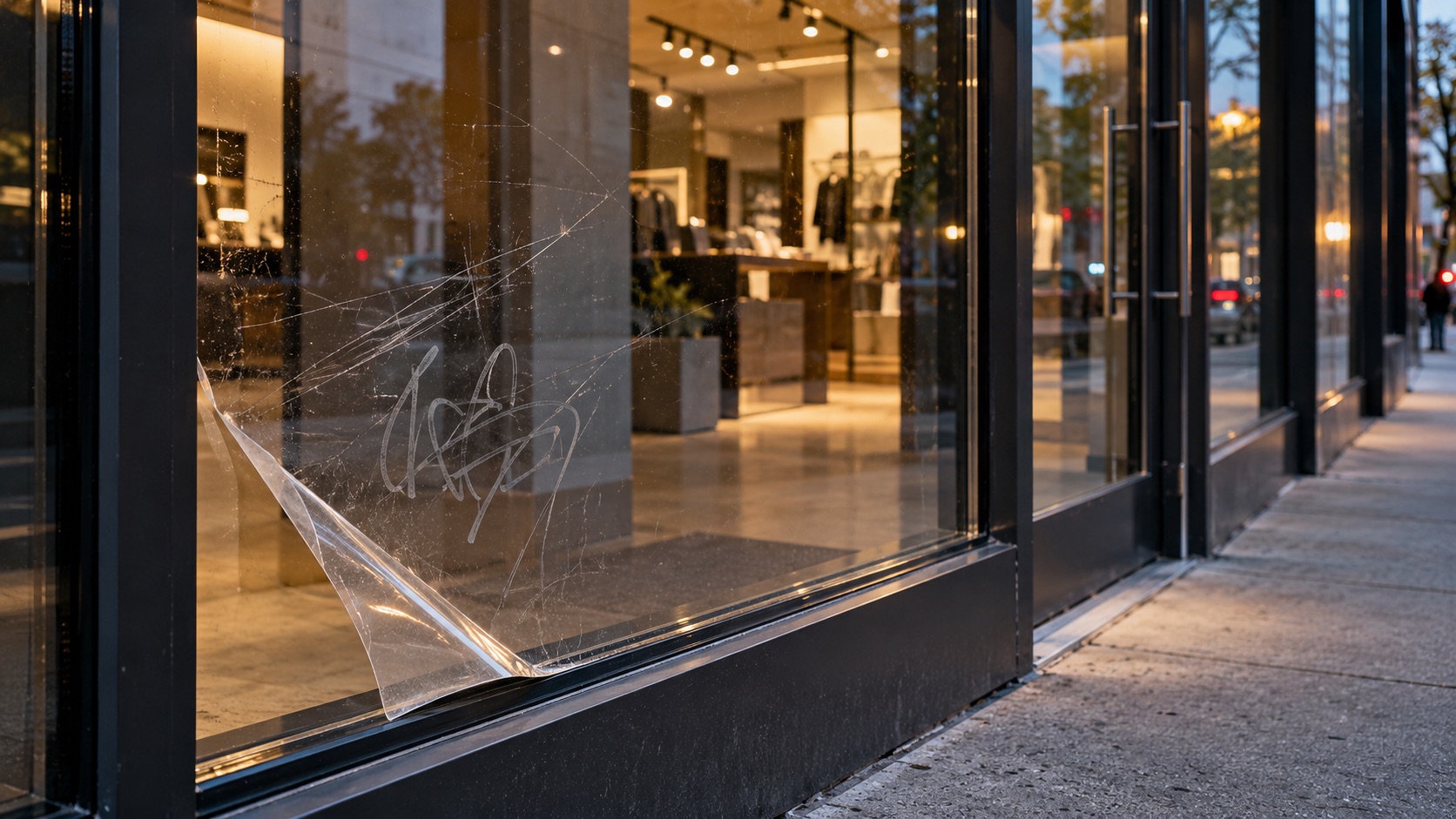
If the glass on your storefront gets tagged, scratched, or acid-etched, the expensive part is not always the cleanup. It is the fact that the damaged surface is the glass itself. Anti-graffiti film changes that surface. The vandal hits a clear sacrificial layer, and when the layer is ruined, it comes off.
That distinction matters in Toronto. The City puts the responsibility for graffiti removal on the property owner, even when the owner did not place it there. Standard graffiti must be removed within 72 hours; hate or gang-related graffiti must be removed within 24 hours.1 A replaceable film layer turns that deadline from a glass-replacement problem into a maintenance visit.
Anti-graffiti film is a sacrificial skin
Anti-graffiti film is a clear polyester film installed on the exposed face of the glass, usually the exterior side of a storefront pane, door lite, vestibule, or transit-facing panel. It is not there to stop a break-in. It is there to take the abuse that would otherwise hit the glass.
Marker, paint pen, light scratching and some etching attempts happen to the film surface first. If the damage cleans off, great. If it does not, the film is stripped and replaced. The pane underneath is left alone, which is the whole economic case for the product.
The best panes are the ones people can reach
The priority is simple: any glass a person can stand beside and damage without being conspicuous. For a GTA business, that usually means:
- street-facing storefront bays and entrance doors;
- vestibule glass, especially beside transit stops and nightlife;
- low panels on corner units where people linger after hours;
- interior elevator and lobby glass in condo or office buildings;
- busier plaza units where one tagged pane invites the next one.
It is less useful on glass that is difficult to reach, rarely exposed to the public, or already protected by roll-down shutters. Film should be used where replacement cost, cleanup urgency, and repeat exposure meet.
Do not confuse it with forced-entry protection
Anti-graffiti film and security film solve different problems. A clear security film is thicker, installed to the interior face in most break-in applications, and often anchored to the frame with structural silicone. Its job is to hold broken glass together and delay entry.
Anti-graffiti film is usually thinner and exterior-facing. Its job is to be replaceable. If the pane also needs smash-and-grab resistance, that is a second layer in the security design, not something the graffiti film should be asked to do.
The useful storefront spec is often layered: anti-graffiti film outside for abuse, clear security film inside for forced entry, and lighting or cameras where the City itself recommends them as graffiti prevention measures.1
It pays when the glass is expensive or the tagging repeats
Anti-graffiti film is not automatically worth installing on every pane. It makes sense when one of three things is true: the glass is expensive to replace, the pane has been hit more than once, or the business cannot afford to wait days for replacement glass while the front elevation looks neglected.
That last point is easy to underrate. Graffiti is not only a repair line. It changes how the business reads from the sidewalk. The City treats prompt removal as part of public-realm upkeep; customers make the same judgment in about two seconds.