
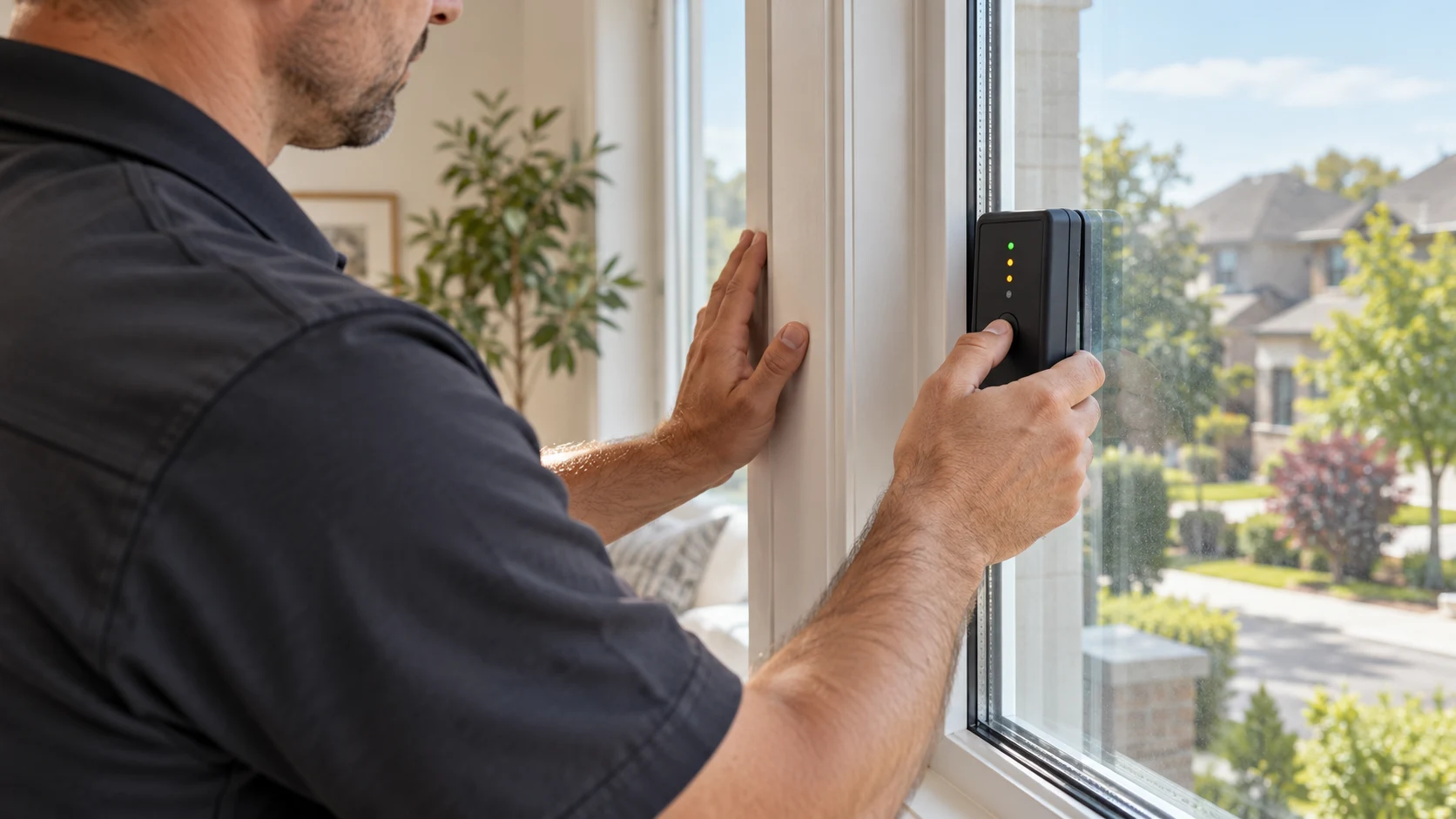
Window film does not automatically damage double-pane or Low-E glass. It also does not automatically belong on every double-pane or Low-E window. The honest answer lives in the combination: the exact film, the exact glass construction, the coating location, the pane condition and the way sun and shade move across it.
That is why a professional assessment should not stop at “yes, it’s double-pane.” Double-pane describes the number of panes. Low-E describes a coating. Neither tells us, by itself, how much solar energy the finished system will absorb or whether the manufacturer approves the proposed film.1
In most cases there is a suitable option. The job is to select it from a current film-to-glass guide, not from a rule of thumb.
Can window film go on double-pane and Low-E windows?
Yes, many architectural films are approved for many insulated and Low-E units. But approvals vary by product. A film that is low risk on clear double-pane glass may require a manufacturer review on a Low-E unit, triple-pane unit, laminated pane or tinted annealed pane. Another product from the same family may not be recommended at all.2
The International Window Film Association says Low-E suitability depends on the type of coating, its location in the window system and the result the customer wants. It directs installers to manufacturer film-to-glass tables because thermal stress is product- and construction-specific.1
The useful question is therefore not “Can Low-E glass take film?” It is: Is this exact film approved for this exact glazing system under these site conditions?
What does the Low-E checker actually tell us?
A normal double-pane insulated glass unit has two panes and four glass surfaces, numbered from outdoors to indoors. Surface 1 faces outside. Surfaces 2 and 3 face the sealed air or gas space. Surface 4 faces the room. A Low-E coating may sit on different surfaces depending on the unit and its intended performance.
A purpose-built Low-E detector identifies the presence and location of a conductive coating. Depending on the meter, it can read through the glass and distinguish which surface carries that coating.3The reading is then compared with the selected product’s technical guide.
The meter is not a universal “safe to film” button. It does not replace the rest of the survey: glass strength, thickness, pane size, shading, frame condition, interior blinds and past seal or glass failures all matter. Solar Gard’s own application worksheet asks for each of those details.4
How can window film contribute to thermal stress?
Glass expands as it warms. If the sun heats the centre of a pane while the edge stays cooler inside the frame, the centre wants to expand more than the edge. That temperature difference creates stress. Existing edge damage, deep frame bite, partial shade and heat trapped by a close blind can reduce the pane’s margin further.5
Film changes how solar energy is transmitted, reflected and absorbed. A heat-absorbing solar film can increase the amount of energy retained by the glass. On the wrong annealed pane, that added absorption can move the system into a higher-risk range. This is why the answer comes from tested product data rather than how light or dark the film looks.
Clear safety and security film is a different case. IWFA guidance says clear safety film adds little to the heat absorption of the glazing, so it generally changes thermal-fracture risk far less than an absorptive solar-control film. “Clear” still does not cancel the need to inspect damaged, coated, laminated or unusual glass.5
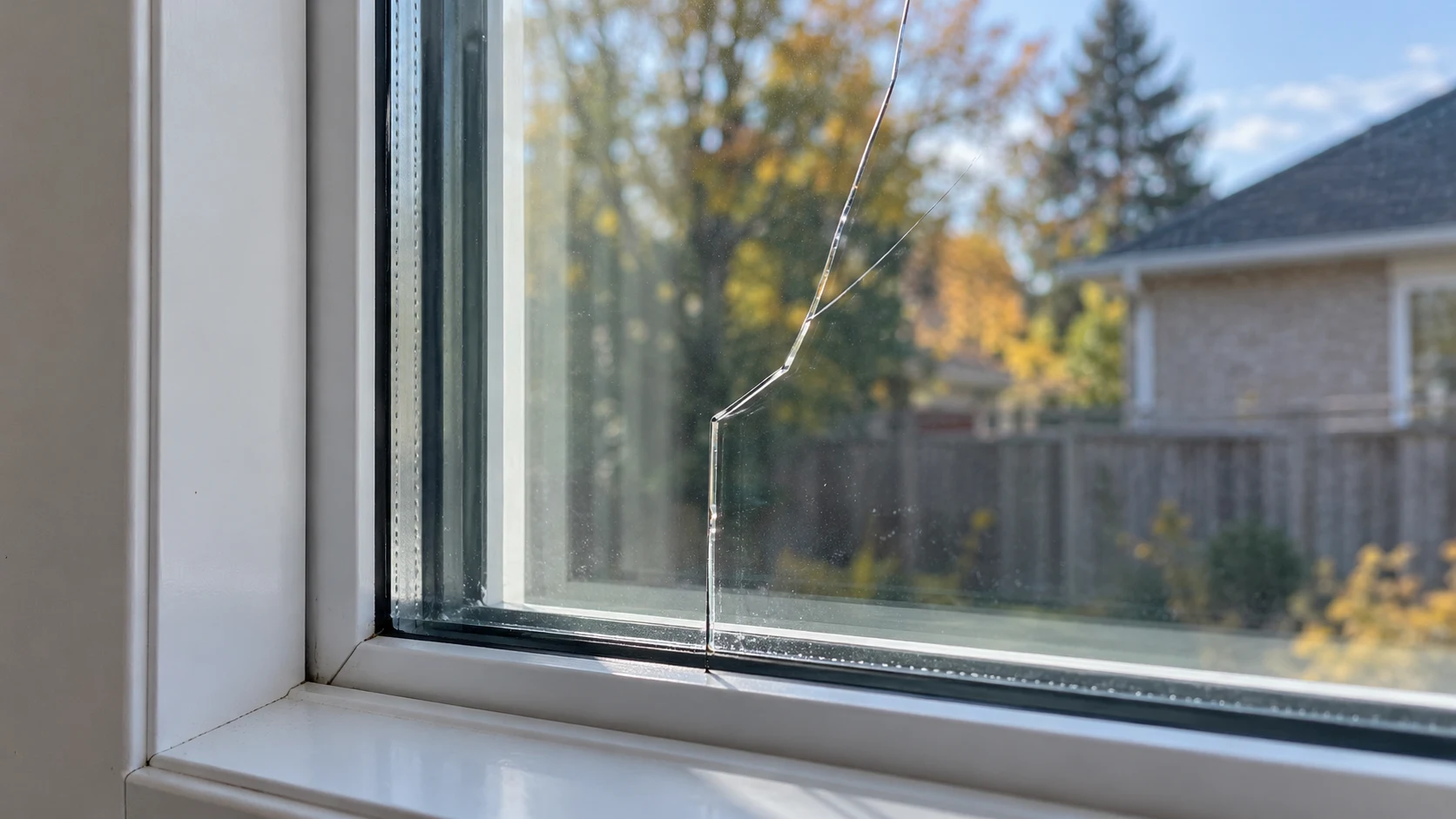
Guardian Glass describes the classic thermal-breakage signature as an edge-origin crack that starts perpendicular to the edge, continues straight for roughly 2 to 5 centimetres, then changes direction or branches. That pattern is evidence of thermal stress; it is not proof that film caused it. Edge damage, installation stress, shading and the original glazing design still have to be investigated.6
What the common window descriptions actually mean
| What is in the opening | What it means for film selection | What we verify |
|---|---|---|
| Clear single pane | Many films are available, but annealed glass still needs a thermal-stress check. | Glass strength, thickness, size, edge condition and shading. |
| Clear double pane | Many clear safety and selected solar films are approved; “double-pane” alone is not an approval. | Both panes, air space, seal condition, film table and warranty. |
| Low-E double pane | Often filmable, but approval changes with coating surface, coating type and selected product. | Low-E meter reading, surface location, SHGC or manufacturer data. |
| Triple pane, laminated or tinted | Product-specific. A manufacturer risk assessment or an exterior-rated option may be required. | Full construction, combined thickness, glass strength and technical approval. |
| Chipped, cracked or failed seal | Do not treat it as a normal film application. | Repair or glass replacement before any film recommendation. |
This is a survey guide, not a product approval table. The current guide for the exact manufacturer and film controls the specification.2
The same caution applies to multiple-film configurations. A pane has an exterior and an interior surface, but the fact that two films can physically occupy separate surfaces does not guarantee that every product pair is approved or covered. We never stack two films on the interior face, and any two-surface specification still needs written product-to-glass confirmation.
What should an installer check before recommending film?
A responsible compatibility survey records enough information to make the manufacturer’s table useful. At minimum, that means:
- Single-, double- or triple-pane construction and the width of the sealed space.
- Low-E coating presence and surface location, measured where it is not documented.
- Annealed, heat-strengthened, tempered or laminated glass.
- Glass thickness, pane dimensions and any tint already in the glass.
- Chips, scratches, cracks, hardened gaskets or evidence of seal failure.
- Compass orientation and partial shade from rooflines, trees, mullions or overhangs.
- Interior blinds, drapes, dark furniture and heating or cooling registers near the pane.
- Any history of unexplained breakage or failed insulated units in the building.
Where the unit is unusual or the guide marks the combination as a caution, the next step is a manufacturer calculation—not a guess. Solar Gard’s process, for example, provides a formal application worksheet so its technical team can assess thermal-breakage and seal- failure risk.4
Does window film void a double-pane window warranty?
There are several warranties in play, and they are not interchangeable: the original window or insulated-unit warranty, the film material warranty, the installer’s workmanship warranty, and any additional glass-breakage or seal-failure coverage offered with the film.
Some window manufacturers restrict aftermarket films. Film manufacturers may provide separate glass coverage only when the exact product, glass type, installation and registration meet their written conditions. The existence of a film warranty does not automatically replace the original window warranty, and a verbal “it’ll be fine” is not warranty documentation.
Before installation, ask for the product name, the film-to-glass approval and the written warranty that applies in Canada. If the unit is still under its original warranty, check that document too.
The glass should choose the film—not the other way around
Double-pane and Low-E windows are not automatic rejections. They are prompts to identify the whole assembly before choosing a product. Clear security film is usually the simpler thermal case; solar, privacy and combined solar-security films require closer attention to absorption, coating location and the manufacturer’s table.
On an ImpactGuard assessment, we check the glass first and quote the film second. If an interior product is not appropriate, the answer may be a different film, an exterior-rated system, a manufacturer review or no film on that pane. That is a better answer than discovering the incompatibility after installation.
Request an assessment and we will identify the glazing, confirm the film-to-glass application and put the selected product and warranty in writing.
Research checked October 28, 2026. Manufacturer tables and warranty terms change; confirm the current Canadian documents for the exact product before installation.