Privacy film is usually sold like decor: frosted glass, bands, gradients, logos, conference rooms. For clinics, therapy offices, legal offices, HR rooms and street-facing treatment spaces, the better way to think about it is physical privacy. What can a person see from the hallway, sidewalk, waiting room, or neighbouring tenant space?
Window film does not replace privacy policies, staff training, access controls, or secure records systems. It does handle the part of privacy that happens before anyone logs into anything: the accidental glance.
Glass leaks context before it leaks data
A passerby may not be able to read a chart through a clinic window, but they can see who is in the room, whether a consultation is happening, whether a staff member is pointing at a screen, or whether a patient is waiting alone. In small offices, that context can be sensitive on its own.
Ontario’s health privacy framework requires health information custodians to take precautions to safeguard personal health information against theft, loss and unauthorized collection, use or disclosure.1 The IPC’s guidance also names physical safeguards as part of a reasonable privacy program, alongside administrative and technical measures.2
Use privacy film where sightlines matter
The best privacy installs are targeted. You do not need to frost every inch of glass to solve the problem, and doing that usually makes the space feel worse. Start with sightlines:
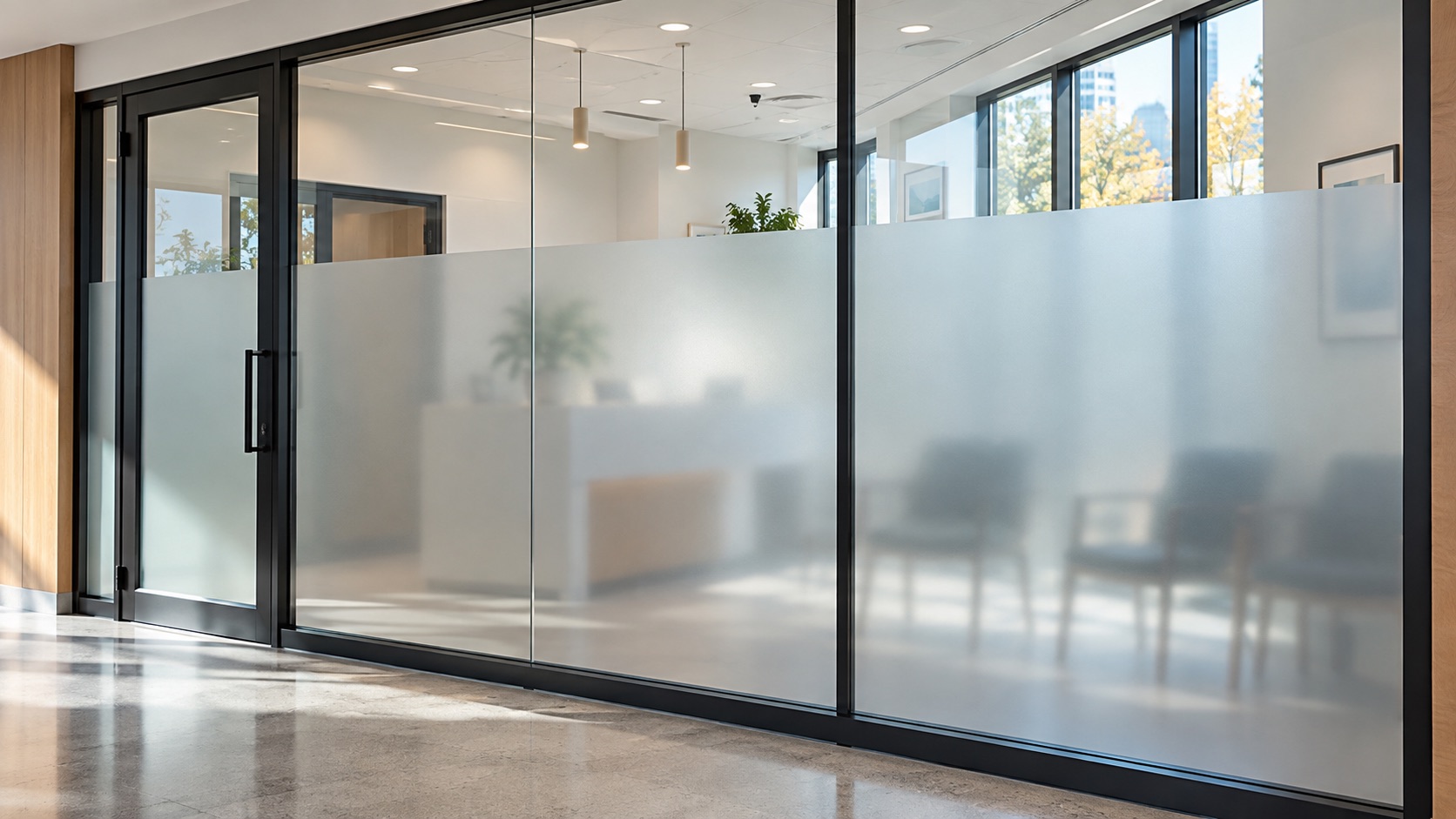
- Street-facing treatment rooms: frost the lower band where people, chairs, desks and screens are visible, while leaving the upper band clear for daylight.
- Reception and admin areas: block direct views to monitors, labels, files and check-in conversations.
- Interior glass walls: use gradients or bands so staff can still read room occupancy without exposing the full room.
- Boardrooms and HR rooms: prioritize seated eye level, not the entire pane.
A good site measure involves standing where the public actually stands: outside the suite door, in the waiting chairs, on the sidewalk at night, and in the neighbouring corridor. The film height should be set from those views, not guessed from a sample book.
Frosted film is not a barrier
Decorative privacy films are not security films. They can obscure the view, soften light and add a branded finish, but they are not designed to hold a broken pane in the frame during a forced-entry attempt.
If the same glass is also a break-in exposure, separate the two jobs. Use a true security film and anchoring detail for forced-entry delay, then add a compatible privacy layer or privacy pattern where sightlines need control. The spec should say which layer is doing which job.
Five questions before choosing a pattern
- What exactly must not be visible: faces, screens, files, movement?
- From where: sidewalk, corridor, waiting room, adjacent building?
- At what time: daytime, after dark, or both?
- Do staff still need to see room occupancy or daylight?
- Does the pane also need security film, solar control, or bird deterrence?
Answer those first and the finish choice becomes much easier. Frost, dusted crystal, whiteout, blackout, gradient and printed patterns all have a place. The wrong answer is picking the prettiest sample before anyone has stood in the hallway.